Adobe Stock Passive Income: $1,000/Month Guide

Adobe Stock Passive Income: $1,000/Month Guide
Passive income has become one of the most searched topics online, but very few methods are realistic for beginners. Many ideas promise fast money, yet fail to deliver long-term results. Adobe Stock is different. It allows creators to build a digital asset library that can generate income month after month, making it one of the most practical ways to create Adobe Stock passive income in 2026.
When I first explored stock platforms, I believed success was limited to professional photographers with expensive equipment. Over time, I learned that the real advantage comes from understanding buyer needs, creating business-focused visuals, and applying a smart Adobe Stock keyword strategy. In this guide, you will learn how to make money with Adobe Stock in a realistic, AdSense-safe, and beginner-friendly way.

Understanding Passive Income with Adobe Stock
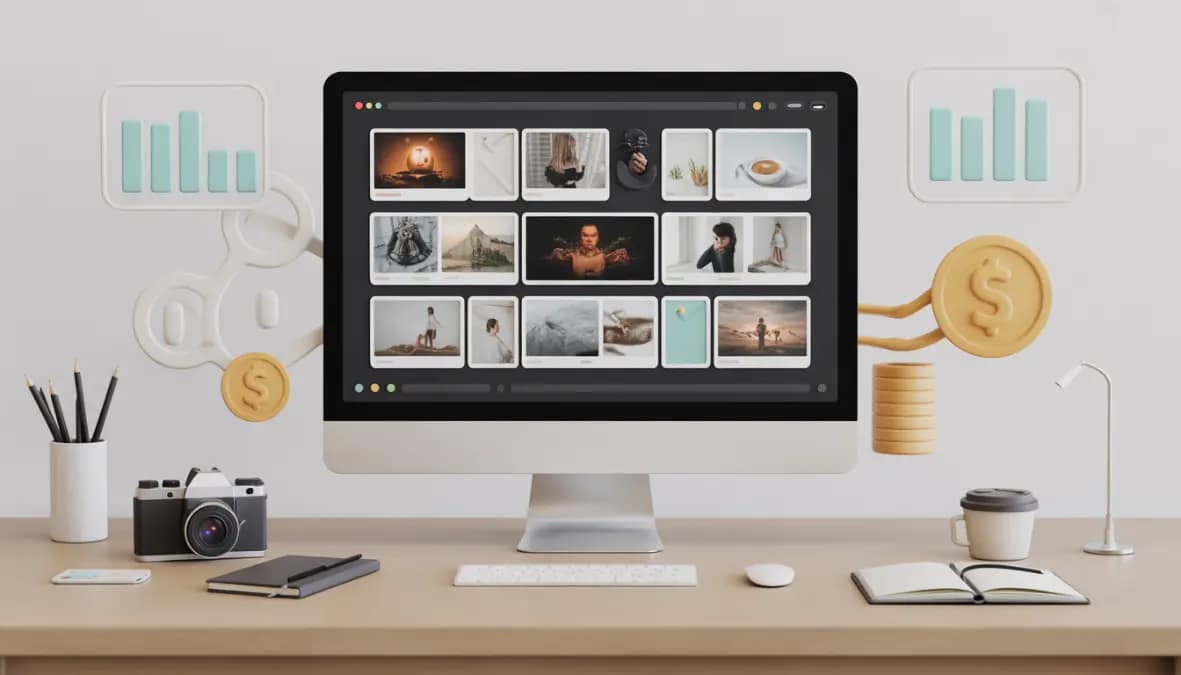
Adobe Stock operates on a royalty-based system. Once your image, illustration, or video is approved, it becomes available to millions of Adobe Creative Cloud users worldwide.
How the Income Model Works
- You upload original images, illustrations, or videos
- Adobe reviews and approves the content
- Customers license your work for commercial use
- You earn a commission for every download
This system makes stock photography passive income possible because a single asset can sell repeatedly without additional effort. Unlike freelancing, where income stops when work stops, Adobe Stock rewards creators who think long-term.
Why Adobe Stock Is a Strong Platform in 2026
Many contributors quit early because they expect quick results. Adobe Stock, however, is designed for creators who are willing to build assets over time.
Reasons Adobe Stock Still Works
- Direct integration with Photoshop, Illustrator, and Premiere Pro
- Corporate clients who pay for quality visuals
- Growing demand for AI, business, and technology-related images
- Strong content protection compared to many competitors
From my observation, buyers on Adobe Stock are less interested in artistic trends and more focused on practical visuals they can immediately use. This is why contributors who follow proven Adobe Stock contributor tips tend to perform better.
Who Should Start Adobe Stock (And Who Shouldn’t)
Ideal for:
- Bloggers and digital creators
- Designers using AI tools
- People looking for long-term online income
- Anyone willing to learn basic SEO and keyword research
Not ideal for:
- People searching for overnight money
- Those unwilling to follow platform rules
- Anyone copying or re-uploading content
Adobe Stock rewards patience, consistency, and originality. Shortcuts almost always lead to rejection or account issues.
Step-by-Step Roadmap to $1,000/Month
Step 1: Account Setup & Approval
Create an Adobe Stock contributor account and complete your profile carefully. Treat it like a business profile, not a test account.
Important tips:
- Write a professional bio
- Upload your highest-quality work first
- Avoid experimental or low-value images
Early rejections are normal and should be viewed as part of the learning process.
Step 2: Choosing the Right Niche
Random uploads rarely succeed. Contributors who consistently make money with Adobe Stock focus on specific buyer-intent niches.
High-Performing Niches in 2026
- Artificial intelligence and automation
- Remote work and home offices
- Business meetings and teamwork
- Healthcare technology
- Data, analytics, and finance
In my experience, images that show real-world business use cases sell far better than abstract or purely artistic visuals.
Step 3: Creating Content That Actually Sells
Adobe Stock buyers want visuals they can instantly use in presentations, websites, and marketing campaigns.
Before uploading, ask yourself:
- Does this image solve a business problem?
- Can a company realistically use this in marketing?
Avoid overly dramatic lighting or unrealistic effects. Clean, simple, and professional visuals perform best.
Step 4: AI Images vs Camera Images
Both AI-generated and camera-based images can be profitable, but the strategy differs.
AI Images
- Faster production and scalability
- Ideal for AI, data, automation, and future concepts
- Must be realistic and free from artifacts
Many creators successfully sell AI images on Adobe Stock by focusing on business and technology themes.
Camera Images
- Strong for lifestyle and real people
- Require model and property releases
- Slower production but sometimes higher trust
In 2026, a hybrid approach—AI generation with manual editing—often delivers the best results.
Step 5: Adobe Stock Quality Rules
Adobe Stock has strict quality standards. Ignoring them leads to frequent rejections.
Common rejection reasons:
- Low resolution or poor sharpness
- Noise, artifacts, or AI distortions
- Unrealistic anatomy or details
- Trademark or copyright issues
Every rejection is feedback. Reviewing and improving your work is essential for growth.
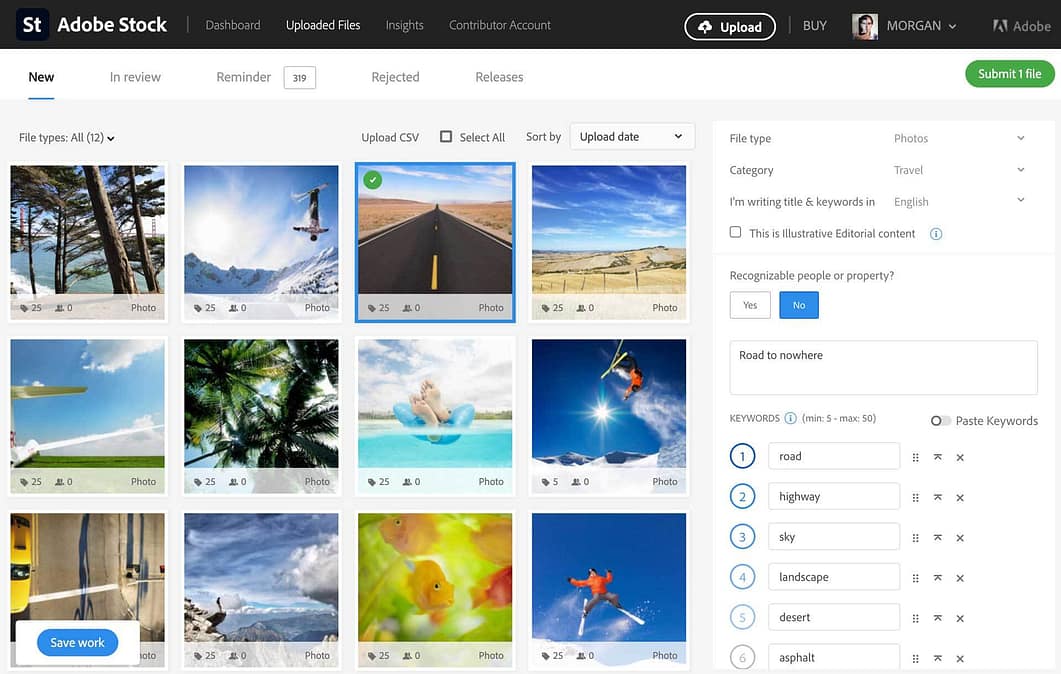
Step 6: Adobe Stock Keyword Strategy That Drives Sales
A strong Adobe Stock keyword strategy often matters more than image quality alone. Without the right keywords, even great visuals remain invisible.
Best Practices
- The first five keywords carry the most weight
- Describe exactly what is visible in the image
- Use professional, buyer-focused terms
- Avoid keyword stuffing or repetition
For example, “AI automation dashboard” performs better than vague phrases like “future technology.”
Step 7: Upload Frequency & Scaling
Consistency builds momentum.
Recommended approach:
- Upload 5–10 images daily or every alternate day
- Track which themes sell the most
- Create variations of successful concepts
From long-term observation, portfolios with 1,000+ targeted assets are the ones most likely to approach $1,000 per month.
Realistic Income Expectations & Timeline
Adobe Stock is not a quick-income platform. Building Adobe Stock passive income requires time and patience.
Typical Growth Pattern
- Month 1–2: Learning, testing, and rejections
- Month 3–5: First consistent downloads
- Month 6–12: Portfolio momentum
- Year 2 and beyond: Compound growth
Most failures happen because contributors quit before momentum starts.
Common Mistakes That Kill Growth
❌ Uploading Without Strategy
Quality without direction rarely sells.
❌ Ignoring Buyer Intent
Think like a designer, not an artist.
❌ Expecting Fast Money
Stock photography rewards consistency, not impatience.
How to Use Adobe Stock Content on a Blog (AdSense Safety)
If you write about Adobe Stock on a WordPress blog, follow these AdSense-safe practices:
- Avoid income screenshots or exaggerated claims
- Share learning experiences instead of hype
- Use original or properly licensed images
- Maintain an educational and neutral tone
Google prioritizes experience-based content over recycled advice.
Long-Term Growth Strategy
Once consistency is achieved:
- Reinforce top-performing niches
- Expand into videos or vectors
- Build a personal brand or niche blog
- Invest more time in quality rather than quantity
Adobe Stock works best when treated as a long-term digital asset business.
Conclusion
Building a $1,000/month passive income with Adobe Stock is realistic, but it is not instant. Success comes from understanding buyers, following proven Adobe Stock contributor tips, and staying consistent.
If you focus on useful visuals, apply a strong Adobe Stock keyword strategy, and think long-term, Adobe Stock can become a reliable source of stock photography passive income that grows year after year.
FAQ Section
Q: Is Adobe Stock beginner-friendly?
Yes. Beginners can succeed by following quality guidelines and keyword best practices.
Q: Can AI images really sell on Adobe Stock?
Yes. Many contributors successfully sell AI images, especially in business and technology niches.
Q: Is this type of content safe for Google AdSense?
Yes. Educational, experience-based content about Adobe Stock is fully AdSense-compliant.
Leave a Reply